Closing, Retiring, or Selling the Company? Sell the Building Too
When the operation inside a warehouse comes to an end, the building is usually the last big thing left to settle. We buy owner-user industrial buildings in the Las Vegas valley for cash, exactly as they stand.
- Bought as-is
- No agent commission
- You pick the closing date
- Tenants can stay
- Local to Las Vegas
When the business ends but the building stays
Plenty of Las Vegas business owners bought the building they worked out of. It made sense at the time: no landlord, a fixed cost, and equity building up while the company grew. The catch shows up at the end. A business can be closed, sold, or handed off, but the real estate has to be dealt with separately, and it rarely lines up neatly with the rest of the exit.
Retiring after years in the same building
If you have run a shop, a distribution operation, or a contractor yard from the same building for a long time, retirement often means the building is full of history: old racking, a mezzanine you built yourself, a paint booth or compressor lines that only made sense for your work. You want out cleanly, not a second job getting the place ready for a buyer.
Selling the operating company without the real estate
Many buyers of a small business want the customer list, the equipment, and the name, but not the building. Maybe they plan to move the operation, or they cannot finance both. That leaves you holding an industrial property you no longer use. A direct sale lets you separate the two deals so the building does not hold up the business sale or sit vacant afterward.
Winding down for good
Sometimes the business is simply finished: the market changed, a key customer left, or the energy is not there anymore. Winding down is hard enough without carrying an empty building, paying property taxes, insurance, and utilities on something that produces nothing. If cash is already tight as you close, our page on selling a warehouse under financial pressure covers that side of it.
What's left inside when the operation stops
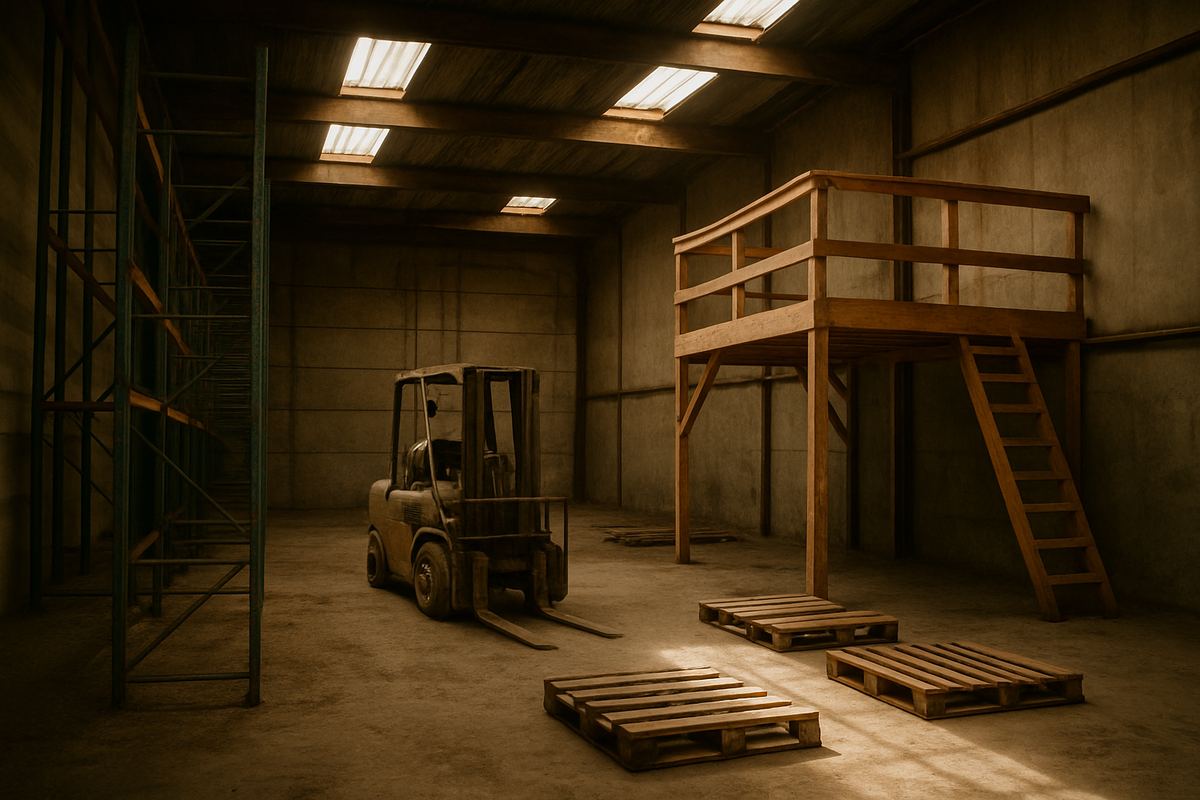
Closing a business leaves things behind. Pallet racking bolted to the slab, a forklift that hasn't run in a year, shelving full of slow-moving inventory, office furniture, scrap, drums of something nobody remembers ordering. On a traditional listing, all of that has to be cleared and the building presented. On a direct sale, it does not.
Racking, equipment, and owner-built improvements
You can take what you want to keep or sell separately, and leave the rest. Tell us what will stay when we walk the building, and the offer accounts for it. That includes owner-built improvements like a mezzanine, a welded-in cage, or office buildouts that a new user might tear out. We buy as-is, so the cleanup becomes our problem rather than one more item on your shutdown checklist.
Put a Number on It
Send the address and a few honest details. We will look at the building the way it actually is and come back with a cash offer — no listing, no repairs, no showings to strangers.
Prefer to talk it through first? The red button in the corner rings our line directly.
Why owner-user buildings can be slow to sell
A building shaped around one business is not always easy for the next owner to picture. Clear height that suited your work might be too low for a modern racking layout. You might have grade-level roll-up doors where a distributor wants dock-high loading, or three-phase power sized for machinery a new owner does not need. None of that makes the building worthless. It just narrows the pool of buyers on the open market and stretches the time it can sit.
Listing also brings financed buyers, and lenders on industrial property often require inspections, appraisals, and a Phase I environmental report before they will fund. Each step is a chance for the deal to be renegotiated or fall apart. A cash buyer who looks at the building first and makes an offer based on what is actually there takes those steps out of the picture.
Thinking about leasing it out instead?
Some retiring owners consider keeping the building as a rental. That can work, but it turns you into a landlord at the exact moment you wanted fewer obligations. Owners who tried it and want out describe the experience on our page about landlord fatigue with industrial property. If your company is not closing but simply needs a bigger or smaller space, that is a different situation, and selling while your business moves to a new facility is the better fit.
How a sale works when you're closing up shop
The order of operations matters when a business is ending. This is the usual sequence for an owner-user sale, and our general buying process explains each stage in more detail.
- Set your shutdown date first. Decide when operations stop or when the company sale closes. We work backward from that so the building sale fits your timeline instead of forcing a new one.
- Walk the building together. We look at the structure, roof, doors, power, yard, and whatever equipment or inventory will be left behind, and we ask what you know about the building's history.
- Get a cash offer on the building as it stands. The offer comes after we see the property, not before. If the company and the real estate are in different entities, we confirm who signs.
- Clear out what you want and leave the rest. Take the tools, trucks, and anything with resale value to you. What stays is accounted for in the offer.
- Close through a local title company on your date. You pick the closing date, there is no listing, and no agent commission is due on a direct sale.
Owner-user buildings we buy around the valley
Owner-user buildings show up all over Las Vegas. Many are older block and tilt-up buildings near Industrial Road, Western Avenue, and Highland Drive, where small manufacturers and trade shops have operated for decades. Others sit in the established industrial areas of North Las Vegas or along Gibson Road and Sunset Way in Henderson's industrial district.
If you are also leaving the valley once the business is done, read about selling before you move away from Las Vegas, since an out-of-state closing adds a few steps. For partners splitting up the proceeds or an ownership group closing out the asset, cashing out of a warehouse investment covers the entity and partnership questions. Common questions about inspections, title, and timing are collected in our seller FAQ.
Quick Answers
Can I sell the building before my business sale closes?
Yes. The building and the operating company are separate assets, often owned by separate entities. We can schedule the real estate closing before, alongside, or after the business sale, depending on what your buyer and your accountant recommend. Tell us the business sale timeline early and we will set the building closing date around it.
Do I have to remove equipment and racking before closing?
No. Remove whatever you want to keep or sell on your own, and leave the rest. We look at what will remain when we walk the building, and the offer reflects it. Bolted-down racking, old office furniture, scrap, and leftover inventory are all things we regularly deal with after closing.
The building is owned by an LLC that is also winding down. Is that a problem?
Usually not. We confirm with the title company which entity holds title and who has authority to sign for it. If the LLC is being dissolved, the sale typically needs to close while the entity is still in good standing with the Nevada Secretary of State, so it helps to coordinate the timing with your attorney or accountant.
What if my business buyer wants to rent the building for a while?
Bring it up when we first talk. A sale with a tenant in place is something we can look at, and an existing lease or a short occupancy arrangement changes how we evaluate the property. We would rather know about it at the start than discover it at closing.