Selling Your Warehouse Before a Nevada Trustee Sale
A notice of default on an industrial building is frightening, but it starts a process with defined steps. Understanding them tells you how much room you have to sell on your own terms.
- Bought as-is
- No agent commission
- You pick the closing date
- Tenants can stay
- Local to Las Vegas
Start with the paperwork in your hand
Before you call anyone, find the most recent document from your lender or its trustee and note three things: what it is called, the date it was recorded, and whether a sale date appears on it. Those details tell you where you are on the calendar. Most commercial loans on Nevada warehouses are secured by a deed of trust that contains a power of sale, which lets the trustee foreclose without a lawsuit. Some loans are foreclosed through the courts instead, and SBA-backed or private loans can carry their own terms, so have a Nevada attorney read your loan documents. Everything below is general background, not legal advice.
How a non-judicial foreclosure usually unfolds in Nevada
Notice of default and election to sell
The process formally begins when the trustee records a notice of default and election to sell with the Clark County Recorder. Under NRS 107.080, the borrower generally has a period of at least three months after that recording before the property can be noticed for sale.
Notice of trustee's sale
After that period, the trustee can record and serve a notice of sale. The statute requires the notice to be posted and published for a stretch of weeks before the auction, so a sale date usually gives you some lead time, but not much.
The auction
The trustee sells the property at a public auction, and the winning bid is often the lender's credit bid. Once the sale is complete, your ownership is generally gone. Nevada's foreclosure mediation program is aimed at owner-occupied homes, so a warehouse owner usually should not count on it.
Guarantees and deficiency exposure
Many commercial loans carry a personal guarantee. If a trustee sale brings in less than the debt, Nevada law generally allows the lender to apply for a deficiency judgment within six months after the sale, subject to limits the court applies. Ask your attorney what your guarantee means for you; it often changes how much a voluntary sale is worth to you.
Put a Number on It
Send the address and a few honest details. We will look at the building the way it actually is and come back with a cash offer — no listing, no repairs, no showings to strangers.
Prefer to talk it through first? The red button in the corner rings our line directly.
Where a cash sale fits on that calendar
Until the auction happens, you still own the building and can usually sell it. A sale closes through a title company, which gets a payoff figure from the lender and pays the loan from the proceeds. Anything left after the loan, liens and closing costs goes to you, which is equity a foreclosure auction would likely have taken.
Early, right after the notice of default
This is the best time to call. There is room to walk the building, review the title report and choose a closing date without a sale date breathing on it. The lender may also be more open to talking about reinstatement or a payoff while things are early.
Late, with a sale date set
We will still look, and we will tell you plainly whether we can close in the time left. Sometimes the trustee sale can be postponed while a signed contract moves toward closing, but that is the lender's decision, not ours or yours. Your attorney should be in that conversation.
If the debt is larger than the building is worth, the lender would have to accept less than the full payoff for a sale to close. Our page on selling when liens or late payments are stacking up covers that situation in more detail.
What we do when a sale date is on the calendar
- Share the notice. Send us the recorded notice of default or notice of sale, the property address and a rough loan balance. We read the dates before anything else.
- We tour the building right away. We look at the condition as-is, including the roof, slab, doors, power and anything left inside, and give you a written cash offer.
- Title requests the payoff. Once a contract is signed, the title company orders a payoff demand from the lender and a title report showing every lien.
- Your attorney talks to the lender. If timing is tight, your attorney can share the signed contract and ask whether the sale date can move. We provide whatever documentation helps.
- Close before the auction. The loan is paid from proceeds, the foreclosure stops because the debt is satisfied, and any remaining equity is paid to you.
Our step-by-step look at how a direct sale closes fills in the general mechanics. One honest note: if there is very little time left before the auction, we will say so on the first call rather than sign a contract we cannot close.
Buildings in foreclosure are often in rough shape
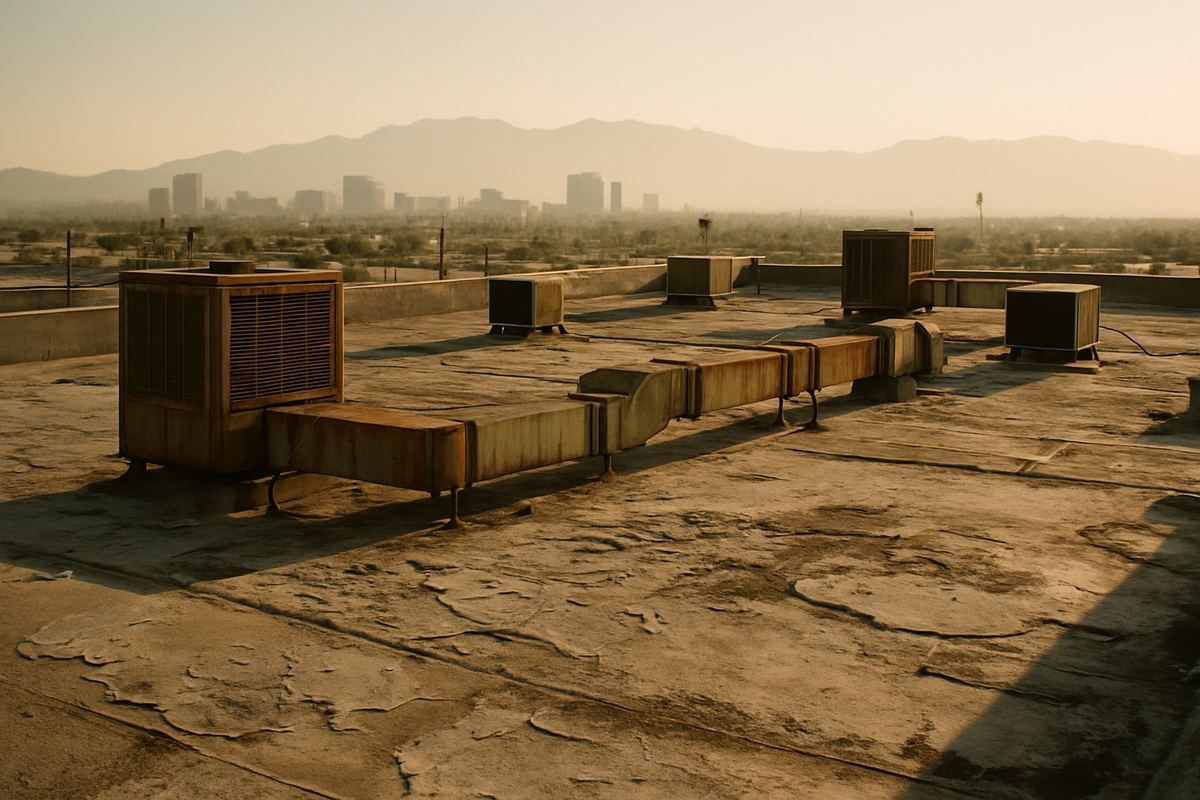
When the money gets tight, maintenance is usually the first thing to go. By the time a notice of default arrives, the swamp coolers may be dead, the fire sprinkler inspection may have lapsed, and the roof may need more than a patch. We buy that way, so you do not have to spend money you do not have; our page about buildings with serious physical problems lists what we see most. Owners who were already exhausted by tenants and upkeep before the loan went bad may also see themselves in our notes on landlord burnout.
We look at foreclosure situations anywhere in our area, from older block buildings in the West Central industrial district to business-park space in the airport submarket and shops around Henderson's industrial corridors. If time is short, use the contact page today, and check the common questions from warehouse sellers while you wait.
Quick Answers
Can I still sell my warehouse after a notice of default is recorded?
Generally, yes. Until the trustee sale is completed you usually still own the property and can sell it. The title company gets a payoff figure from the lender, pays the loan at closing, and the foreclosure stops because the debt is satisfied. Have a Nevada attorney confirm your rights under your specific loan documents and any recorded notices.
Does Nevada foreclosure mediation apply to commercial property?
Nevada's foreclosure mediation program is directed at owner-occupied residential property, so a warehouse or industrial building generally does not qualify. That makes it more important for a commercial owner to understand the trustee sale calendar and act early. Your attorney can tell you whether any other protections or negotiation options apply to your loan.
Can you stop the auction once you sign a contract?
No. Only the lender or its trustee can postpone or cancel a trustee sale. A signed contract with a realistic closing date sometimes persuades a lender to postpone, because a payoff is usually better for them than an auction, but there is no guarantee. Closing and paying off the loan before the sale is what actually ends the foreclosure.
What happens to my personal guarantee if I sell?
If the sale pays the loan in full, the guarantee usually has nothing left to secure. If the sale price is lower than the debt, the lender must agree to the shortfall, and whether you stay liable for it depends on what you negotiate. Have your attorney review the guarantee and get any release in writing before closing.