Selling a Warehouse With a Bad Roof, a Cracked Slab, or Worse
Some buildings have a list of problems that would scare off a typical buyer or their lender. We buy industrial buildings with known physical issues as they are, and the offer comes after we have looked at them.
- Bought as-is
- No agent commission
- You pick the closing date
- Tenants can stay
- Local to Las Vegas
Problems we see in Las Vegas industrial buildings
Desert sun, monsoon storms, and decades of heavy use add up. These are the conditions owners most often call us about. One of them alone can stall a traditional sale. Several together usually do.
Roofs and roof membranes
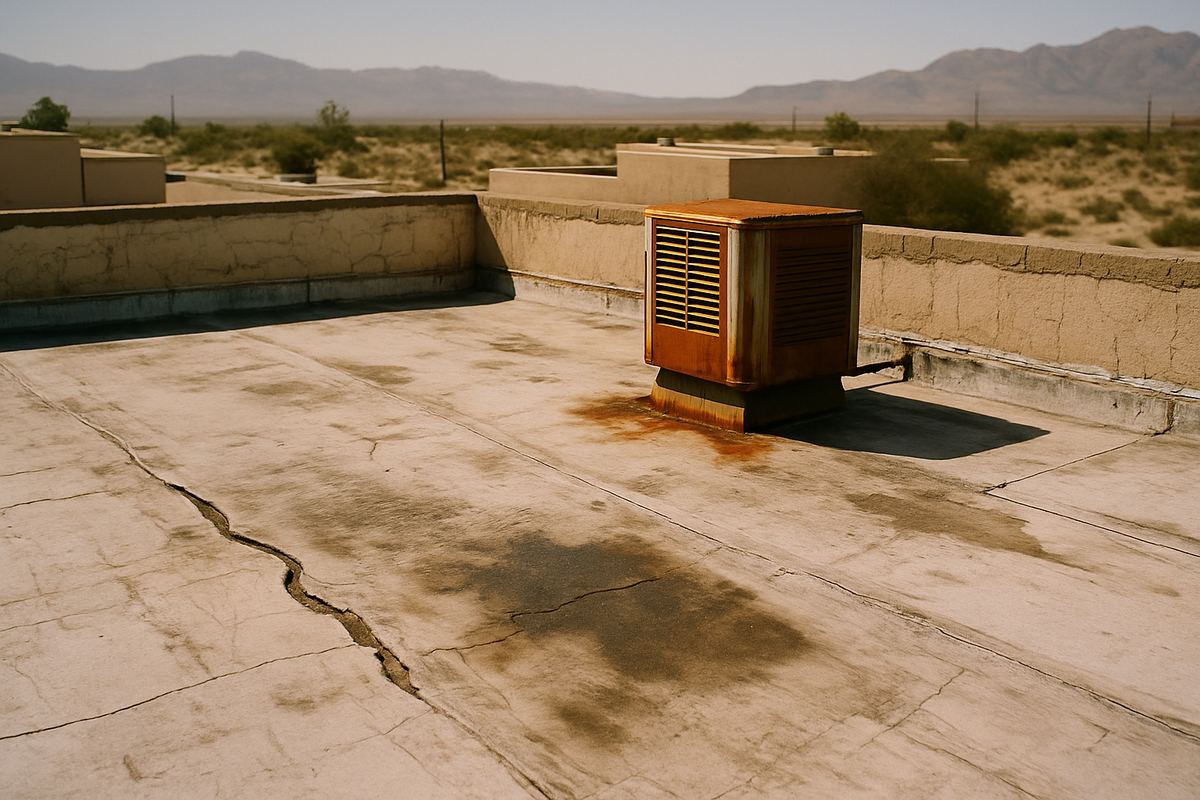
Flat and low-slope roofs on older warehouses take a beating from UV and heat. Built-up and single-ply membranes blister, split at the seams, and pull away at parapets and penetrations. Ponding water, rusted metal decking, and stained ceiling tiles inside are common signs that a full replacement, not a patch, is on the horizon.
Slabs, CMU block, and tilt-up panels
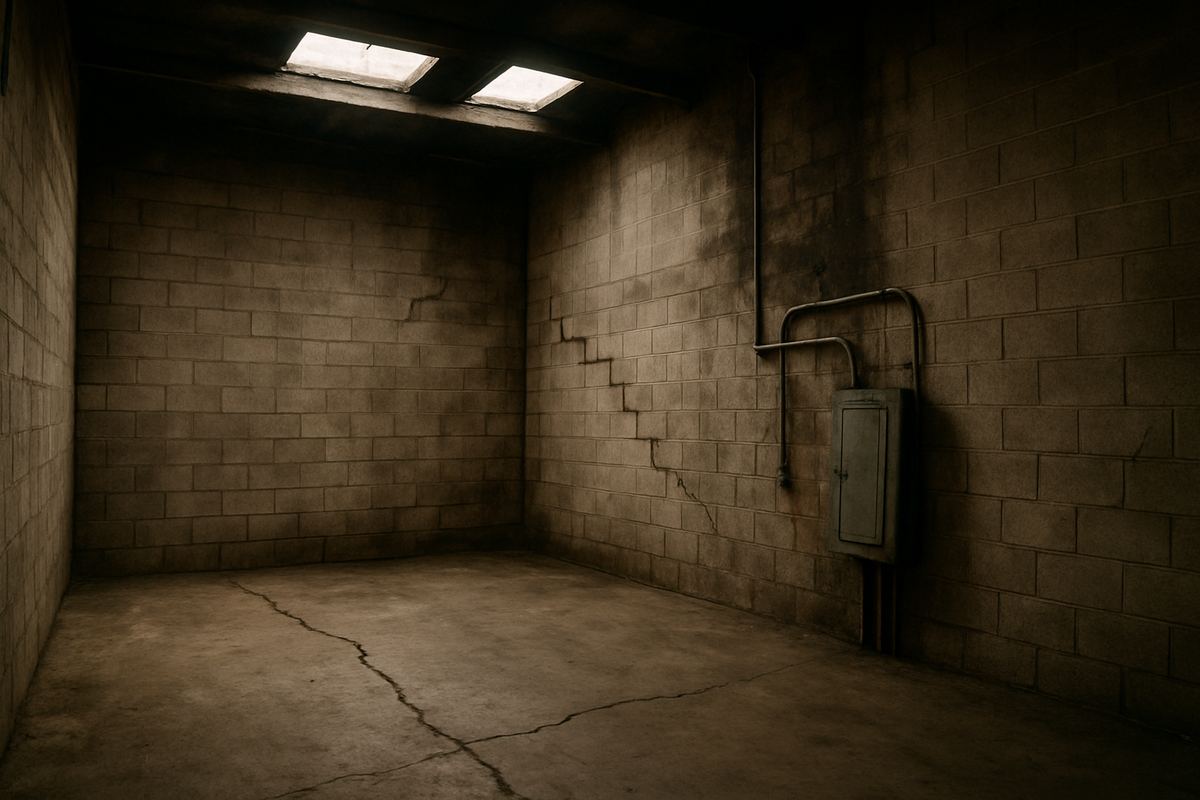
Slab cracks, heaving, and spalled joints are common under years of forklift traffic, and some soils in the valley make it worse. On the walls, CMU block buildings show stair-step cracking and failed mortar, while older tilt-up buildings can have panel connection or joint sealant problems. We look at these in person rather than guessing from photos.
Cooling, power, and fire protection
Many older buildings still rely on evaporative coolers that are rusted out or barely running. Electrical service may be undersized, single-phase where an industrial user expects three-phase power, or have panels that need replacement. Fire sprinkler systems can be outdated, out of inspection, or not designed for current storage heights, which matters to anyone planning high-piled storage that might call for ESFR heads.
Fire damage, code violations, and open permits
A building that has had a fire, has open code enforcement cases, or has unpermitted additions is very hard to sell on the open market. Buyers' lenders often will not touch it until the issues are cleared. We buy buildings in that condition and take on the work of resolving them after closing.
Environmental questions
Former auto shops, metal finishing, printing, or chemical storage can leave owners worried about what a Phase I environmental report would turn up. Tell us the building's use history as you know it. We would rather have an honest conversation at the start than surprises during escrow.
Why repairing first often doesn't pay off
The usual advice is to fix the problems and then list. With industrial property, that plan has real risks. Repair estimates on roofs, slabs, and electrical often grow once work begins and contractors find what was hidden. You carry the cost and the delay, and there is no promise the repairs come back to you in the sale price.
Listing as-is without repairs has its own problem. Financed buyers order inspections, the lender's appraiser notes the defects, and the deal gets renegotiated or falls apart, sometimes more than once. A cash buyer who has already seen the problems and priced them in removes that cycle.
Put a Number on It
Send the address and a few honest details. We will look at the building the way it actually is and come back with a cash offer — no listing, no repairs, no showings to strangers.
Prefer to talk it through first? The red button in the corner rings our line directly.
Tell us what you know
You do not need to hire inspectors or produce a report before talking to us. Just share what you are aware of: the roof leaks over the back bays, the coolers have not run in two summers, the city sent a notice about the yard. We will see the rest when we walk the building. Being upfront makes for a cleaner offer and a smoother closing.
Many of the buildings in this condition are inherited, and the heirs never knew the history. If that sounds like your situation, our page on selling an inherited warehouse covers the estate side. If the repairs have piled up because money is tight, read about selling under financial pressure. And if the issue is less one specific defect and more the constant upkeep of a leased building, our page for tired industrial landlords fits better.
How a sale works for a building with problems
- Describe the condition honestly. Roof, slab, walls, systems, fire history, any notices from the city or county, and how the building was used.
- We inspect it ourselves. We walk the roof, interior, yard, and mechanical systems. If the building is unsafe to enter in places, we work around that.
- You receive a cash offer that accounts for the condition. No repairs, cleanup, or debris removal first, and no repair credits negotiated later.
- Title reviews liens and code-related recordings. Any open items that need to be paid or released at closing are identified up front.
- Close on your chosen date. No listing and no agent commission on a direct sale. The building's problems transfer with it.
More detail on each stage is in how we buy warehouses for cash, and specific questions about inspections and condition are answered in our seller FAQ.
Older industrial stock around the valley
Deferred maintenance is most common in the valley's older industrial areas. The block and tilt-up buildings along Industrial Road, Western Avenue, and Highland Drive, covered on our west-central warehouse page, include some of the oldest industrial stock in town. Older buildings in North Las Vegas and East Las Vegas show the same patterns: aging roofs, original electrical, and coolers well past their service life.
Newer buildings are not immune. A tilt-up from the last couple of decades can still have a neglected roof, a damaged dock, or a sprinkler system that was never kept up. A building that sat vacant for a few years can also come back with vandalized wiring, stripped HVAC units, and debris piled in the yard. Wherever it is, from Henderson to the I-15 north corridor, the valley-wide list of Las Vegas areas where we buy warehouses shows where we work, and we will come look at the building in person.
Quick Answers
Do I need an inspection report before you'll make an offer?
No. We do our own walkthrough and look at the roof, slab, walls, doors, and systems ourselves. If you already have reports, a roof bid, or a Phase I environmental from a past refinance, share them, since they help. But you do not need to pay for anything new before getting an offer.
Will you buy a building with open code violations?
Yes. Let us know about any notices or open cases from the city or county, and title will check for anything recorded against the property. We buy buildings with code issues and unpermitted work as they are, and we take on resolving them after closing.
The building had a fire. Is it still sellable?
Usually, yes. Fire-damaged industrial buildings are something we look at on a case-by-case basis. If there is an open insurance claim, tell us about it early, because how the claim is resolved can affect the sale. We will walk what is left and talk through the options with you.
What if I'm worried about environmental contamination?
Tell us what you know about how the building was used, such as auto repair, metal work, printing, or chemical storage. An honest history up front lets us evaluate the property properly. We would much rather discuss possible concerns at the start than run into them unexpectedly during escrow.