Sell Your Las Vegas Warehouse As-Is, Directly to a Cash Buyer
We buy warehouses, flex buildings and industrial properties across the valley in the condition they are in today. No listing, no repairs, and you decide when it closes.
- Bought as-is
- No agent commission
- You pick the closing date
- Tenants can stay
- Local to Las Vegas
A Direct Buyer for Buildings the Market Passes Over
We Buy Ugly Warehouses purchases industrial real estate across the Las Vegas valley, within roughly 30 miles of the city. We buy with our own cash and we are the party that signs the purchase agreement and closes. We are not a broker shopping your building to someone else, and we are not a lender.
The buildings we look at most often include:
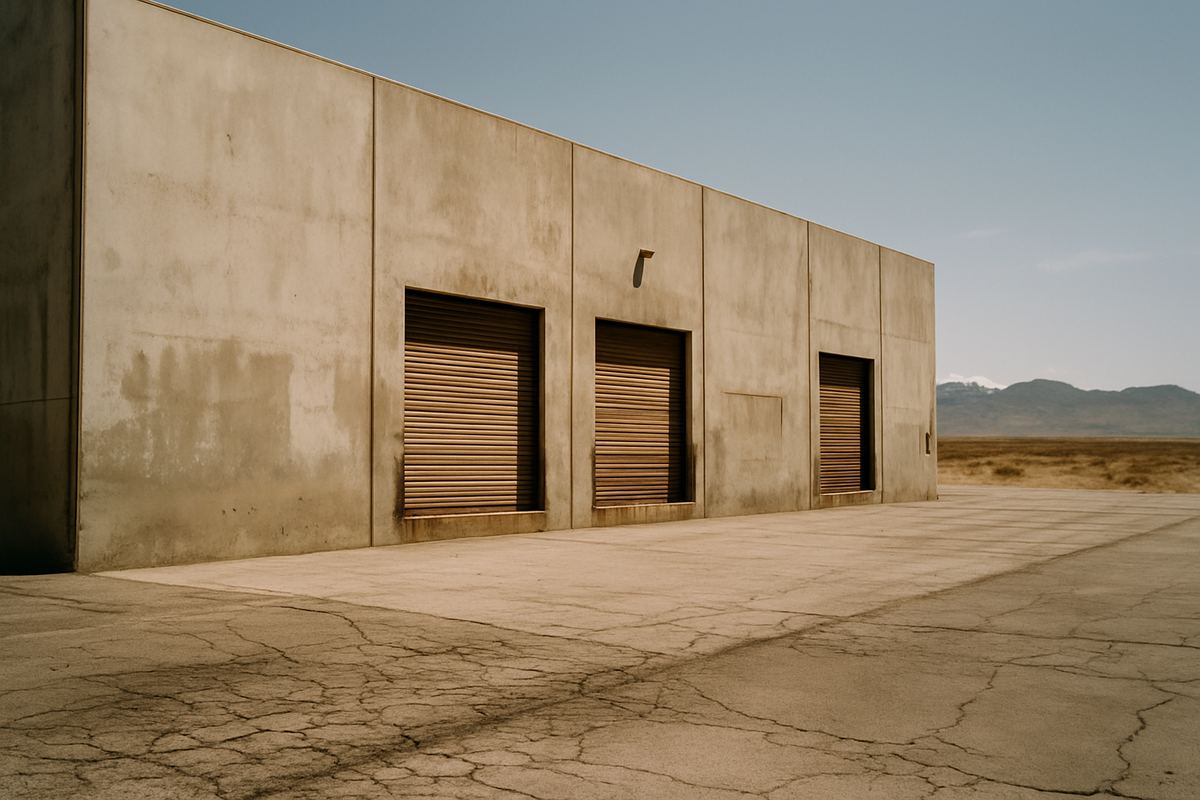
- Older tilt-up and CMU block warehouses with original roofs and dated offices
- Small-bay flex and multi-tenant industrial with a mix of occupied and empty units
- Distribution and manufacturing buildings that no longer fit the business inside them
- Contractor yards with a shop, office or storage building on the lot
- Vacant buildings, partially leased buildings and fully tenant-occupied buildings
Most owners who call us are not reacting to the market. They are reacting to something in their own life. A parent passed away and left a building to several siblings, which is the situation on our page about selling an inherited warehouse or estate property. A partnership wants out, which we cover in liquidating an industrial investment. A company that occupied the building for years is closing or retiring, the subject of selling the building when the business winds down. Others are tired of managing tenants from a distance, dealing with a cash crunch, or dividing property in a divorce. The full range of reasons is laid out on our page about why Las Vegas owners sell industrial buildings directly.
Situations We Buy In
Every building lands on our desk for a reason. These are the ones we see most often around the valley.
Inherited Warehouse
Heirs and executors holding an industrial building they never planned to own: we buy as-is and coordinate with the estate attorney and title.
Investment Exit
For investors, partnerships and LLC members ready to exit an industrial asset, including sellers working against a 1031 exchange calendar.
Financial Pressure
Owners juggling late loan payments, tax liens, contractor liens or a business short on cash, looking for a straightforward as-is sale.
Facing Foreclosure
Owners holding a notice of default or a trustee sale date on a commercial loan who want to sell before the auction and keep any equity.
Divorce or Separation
Spouses or partners separating who need to turn a shared industrial building into cash on agreed or court-ordered terms, with one neutral offer.
Closing the Business
Retiring, shutting down, or selling the operating company without its real estate? We buy the building you ran the business from, as-is, for cash.
Moving Away
Headed out of state or out of the valley? Sell the industrial building on a schedule built around your move, with remote signing through title.
Bigger or Smaller
Business still running but the space no longer fits? Sell the facility you're leaving and put its equity toward the next building.
Tired Landlords
Leases, vacancies, CAM reconciliations, and late-night repair calls wearing you down? Hand off the industrial building, tenants and all, in one direct sale.
Problem Buildings
Leaking membrane, heaved floor, dead coolers, fire or code trouble? We look at the damage in person and buy the building without repairs.
Why Owners Sell to a Direct Buyer Instead of Listing
Listing an industrial building with a broker works well when the property is clean, leased to a strong tenant or ready for an owner-user to move into. It works less well when the roof is near the end of its life, the electrical service is undersized, or a buyer's lender will want a stack of reports before it funds. Each of those issues turns into a contingency, and every contingency is a point where a deal can stall or get renegotiated weeks after you thought it was settled.
Where listed industrial deals tend to stall
The usual friction points are financing, inspections and appraisal. A bank appraiser may not see the building the way a buyer does. An inspection can turn up a roof leak or slab movement, and suddenly the buyer wants a credit or walks. A lender may require a Phase I environmental report, and if that report recommends more testing, the timeline stretches. With a direct cash sale there is no buyer's lender, no listing period and no showings, and there is no agent commission on a direct sale. You are talking to the person who makes the decision.
When listing is the better choice
A direct buyer is not always the right answer, and we would rather say so up front. If your building is in good shape, fully leased or easy for a buyer to finance, and you have time to wait for the right buyer, an open-market listing may bring more competition. Where we tend to make sense is with buildings that need work, sellers who need certainty, and situations where the paperwork or the people involved make a long listing hard to manage. That includes owners facing a notice of default or trustee sale on a commercial loan, where time is the main constraint.
Put a Number on It
Send the address and a few honest details. We will look at the building the way it actually is and come back with a cash offer — no listing, no repairs, no showings to strangers.
Prefer to talk it through first? The red button in the corner rings our line directly.
What Makes an Industrial Building “Ugly” to a Traditional Buyer
Ugly rarely means the paint. To a typical buyer or lender, an industrial building is ugly when it cannot do what the next user needs without money, time and permits. These are the issues that most often push a building out of the easy-to-sell category.
Roof, slab and the building shell
A roof membrane that has been patched for years, ponding water, or leaks over the warehouse floor will show up in any inspection. Slab cracks, settlement or heaving matter because forklifts and racking need a flat, sound floor. On tilt-up buildings, panel joints and sealant age out; on CMU block buildings, step cracks in the walls raise questions. None of this stops us from buying, but it does scare off buyers who need a lender's approval.
Clear height, doors and yard
Modern tenants want height for racking, and many older valley buildings have low clear height that limits how product can be stored. A building with only grade-level doors, and no dock-high doors, is a harder fit for distribution users. A tight truck court, an unpaved yard or limited laydown space narrows the pool of buyers further.
Power, cooling, fire protection and code
Plenty of older buildings have single-phase or undersized service where a manufacturing user would want three-phase power. Warehouses cooled by tired evaporative coolers, offices on aging rooftop units, fire sprinkler systems that are missing or not up to current standards for high-piled storage, and mezzanines or office build-outs that were never permitted all add cost. So do open code enforcement cases and a history of uses that call for a Phase I environmental review, such as fuel storage or auto repair. Our page on selling a warehouse with roof, slab or code problems goes deeper on each.
These issues show up across the valley, though they are especially common in the older stock along Industrial Road and Western Avenue in the West Central industrial corridor and in the established blocks of North Las Vegas industrial neighborhoods.
Industrial Pockets We Cover
From the older block buildings off Industrial Road to the newer tilt-ups near the Speedway, we look at buildings across every part of the valley.
North Las Vegas
Rear-load multi-tenant buildings, older shops near the I-15 interchanges and vacant distribution space inside the City of North Las Vegas.
Speedway and Apex
Late-1990s flex parks off Speedway Boulevard, yard-heavy sites along Las Vegas Boulevard North, and land-and-building parcels toward Apex.
East Las Vegas
Contractor yards, older shops and newer logistics buildings around Nellis and Lamb, much of it under Clark County rules in Sunrise Manor.
West Central
Block buildings and small shops on Industrial Road, Western Avenue, Highland Drive and Valley View, where city and county lines cross at Sahara.
Airport Area
Small-bay flex and office-warehouse buildings off Sunset Road, Pilot Road and Eastern Avenue, in unincorporated Paradise.
Southwest / Enterprise
Newer tilt-up distribution and multi-tenant parks along Dean Martin Drive, Arville and Blue Diamond Road, in unincorporated Enterprise.
Henderson
Older shops near Gibson Road and Sunset Way, the Black Mountain industrial area, and newer buildings in West Henderson by St. Rose Parkway.
How a Cash Buyer Prices a Building That Needs Work
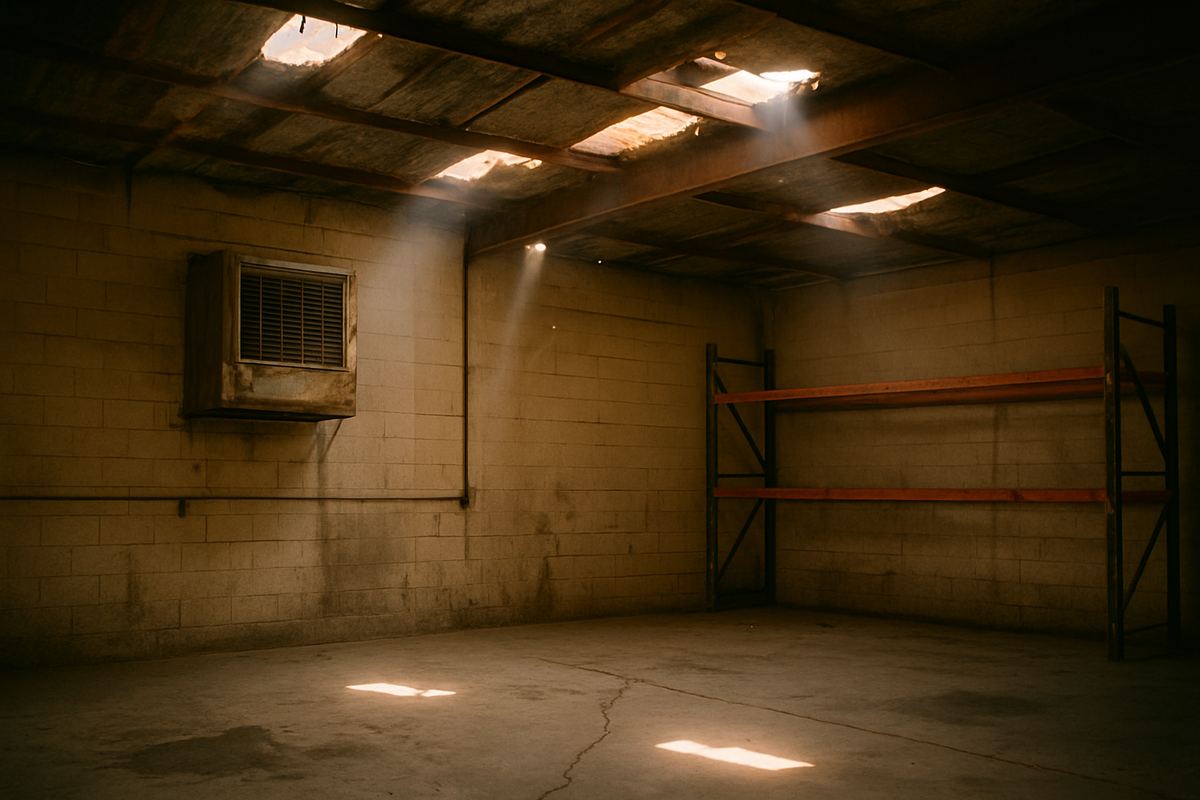
Owners reasonably want to know how a number gets built before they hear it. Our approach is straightforward, and we will explain it on your specific building rather than hand you a figure from a formula.
We start with what the building should be worth once it is repaired, functional and either leased or ready for an owner-user. From there we work backward through the real cost and time of getting it there: the roof, the slab, electrical upgrades, fire protection, environmental follow-up, permits for anything unpermitted, and the months a building can sit empty while work is done and a tenant is found. Carrying costs during that period, such as property taxes, insurance and utilities, count too.
Then we account for what we do not know. A building with clear records, a recent roof and a long-term tenant carries less uncertainty than one with no permits on file and a vacant floor. For a tenant-occupied building, the lease itself matters a great deal: the remaining term, whether it is triple-net or gross, how the rent compares with the market, and the tenant's track record.
This is why our offers come after we have looked at the building, not before. A walk-through lets us price what is actually there instead of guessing at the worst case. Our page on the walk-through and written offer process lays out each step, and the answers about fees, tenants, liens and timing cover the questions owners ask most.
Three Reasons Owners Choose to Work With Us
As-is means as-is
We do not ask you to fix the roof, patch the slab, pull permits or clear out the building before closing. Leftover racking, equipment and old inventory can be part of the conversation instead of a job you have to finish first. Owners who are worn out from managing a property, the situation behind selling a warehouse you are tired of maintaining, often tell us this is the part that matters most.
You set the closing date
Some sellers want to close as soon as title is ready. Others need months to move an operation, wrap up an estate or line up a new facility, which is common for owners moving a growing or shrinking business into a different building. We work to your date, and it is written into the purchase agreement.
Local and direct
We focus on the Las Vegas valley and nowhere else, so we know the difference between a block building off Western Avenue and newer stock in the southwest. You deal with the buyer, not a chain of intermediaries, and we work alongside heirs, attorneys, accountants and title officers when they are part of the picture. Our page about how our company operates and what we stand for explains more.
Where in the Valley We Buy
We buy across the City of Las Vegas, North Las Vegas, Henderson and unincorporated Clark County. Our guide to selling a warehouse by area breaks the valley into its main industrial submarkets. Owners near Harry Reid International, along Sunset Road, Russell Road and Hughes Airport Center, can start with selling an industrial building near the airport. Further up I-15 toward the Las Vegas Motor Speedway and Apex Industrial Park, our page on the Speedway and Apex corridor applies. On the southeast side, we cover Henderson industrial properties around Gibson Road and West Henderson, and to the west of the Strip, the Southwest valley flex and warehouse market along Arville, Dean Martin Drive and Blue Diamond Road.
If your building is somewhere in between, or you are not sure which area it falls in, send us the address and we will take it from there.
Quick Answers
Do you charge fees or commissions to buy my warehouse?
No. We are the buyer, not an agent, so there is no listing agreement and no agent commission on a direct sale to us. We do not charge you for the walk-through or the offer. Closing costs are handled through a licensed Nevada title and escrow company, and how they are split is written into the purchase agreement so you see it before you sign anything.
Will you buy a building that still has tenants in it?
Yes. We buy vacant, partially leased and fully occupied buildings. Existing leases transfer with the property, so tenants do not have to move out for the sale to happen. We will ask to review the leases, the rent history and any security deposits so the offer reflects the actual income and obligations that come with the building.
Do I have to clean out the building or remove equipment first?
No. You can leave racking, old equipment, materials and leftover inventory behind. Tell us what is in the building and what you want to keep, and we will factor it into the offer and the closing plan. If there is anything you want to take with you, we agree on that in writing so there are no surprises on closing day.
How do you decide what to offer on an industrial building?
We look at what the building would be worth repaired and functioning for its next user, then account for the cost and time of repairs, any vacancy, carrying costs and the risk of unknowns. Leases matter on occupied buildings. We make the offer after we have seen the property, and we will walk you through the reasoning behind it.
Who handles the closing paperwork?
A licensed Nevada title and escrow company handles the closing. They search the title, collect payoff figures for any loans or liens, prepare the closing statement, record the deed with the Clark County Recorder and disburse the funds. You can involve your own attorney or accountant at any point, and we are happy to work with them directly.